Showing posts with label noise. Show all posts

Friday, 22 March 2013

Album Review: My Bloody Valentine - m b v


Whatever way you look at it, I really don't need to do this review. The Metacritic page for m b v, the new album from shoegaze pioneers and critic/fan faves My Bloody Valentine currently hosts 44 professional reviews, none of which rank the album below 6/10, and there have been innumerable other professional, semi-pro and in particular fan-written and videoed (see YouTube) insights into this critical hallowed ground. My two cents aren't going to be particularly gripping, or notable, or controversial. But here goes.

When the superlative-enticting Loveless, what was thought for years to be the last My Bloody Valentine album there'd ever be, was released on pre-Oasis Creation Records in 1991, I had yet to be born. So I'm not able or willing to approach this review from any substantial point of longing or nostalgia, or weightily fluctuate between belief and doubt in the skills and intentions of one of modern music's least understood reclusive geniuses; in short, no 22-year wait for me. This idea seems to be the first thing many of these reviews contain. Forgive me for deconstructing a little further, but the other main attribute to these pieces is their willingness to tell the reader a story, as the event that happened to them, in many cases less than a day before publication, needs to be framed as a highly significant cultural event. Do these people imagine that when people bring up the questions "where were you when the Twin Towers collapsed?" or "where were you when the Berlin Wall came down?", they'll be able to pipe in with "what do you remember about when that My Bloody Valentine album crashed the internet and we all sat there clicking the Refresh button waiting to get onto the site at midnight?"?

Of course I'm exaggerating. I doubt any of these people actually think that this new release, of limited commercial interest, will translate to a larger group of people. I can't know the minds of every music superfan, especially those who have properly reached the end of the 22-year journey and are shedding tears of joy and relief as their fingers hit the keys, but I do know that the days of a genuine event in music are most likely over (even if there have been a few noble attempts recently). Lord knows what the band themselves think about all this fanfare. You can't blame them for avoiding the spotlight; the discrepancy between the instant gratification-seeking "Now!" culture My Bloody Valentine have hungover into and the slow-burning, treated and re-treated to perfection formula they've worked from since 1988 seems to be massive. It's a relief then that m b v takes absolutely no interest in the 21st Century, or any concept of time but its own. It is simply, "the new record".


And not for humility's sake either. With little background information of the record we have no idea how much of it is recent material, or how much of it was written and recorded in the years immediately following Loveless. But it's of no importance. As an album in three parts of three tracks each (for argument's sake), the first section is the most pigheaded towards the idea of radical evolution. Which isn't to say it's ugly and unrefined; in fact completely the opposite: it serves as a reminder of the beautiful anguish of the previous record. The first track, "she found now", ensures the album begins not with a bang, but with a whimper, albeit a pretty, droney whimper. It makes sense that this song is sung by bandleader and crucial component Kevin Shields, whose studio experiments redefined the possibilities for guitar-based music; a radical change that has yet to be matched since (to those unfamiliar with My Bloody Valentine, this cannot be overstated). It's true that it shares similarities with another track that bears his lead vocals, "Sometimes", but this is far from a bad thing. It means that the album has a disarming yet familiar start, that shies away from controversy and comforts the listener into staying put for the remainder of the experience. What's most impressive about "she found now" is the sense of rhythm given by one delayed guitar. Given that Shields recorded the majority of the album by himself, with the exception of Bilinda Butcher's vocals and Colm Ó Cíosóig's drum parts, the track has an extra personal feel; and the listener can feel the meaning of the several years it may have taken to record and release it. The rest of the band appear on the next two songs, which feels like the true reintroduction. Bilinda sings in her signature indiscernible vowels over the solid rhythm Colm musters up for "only tomorrow"; her voice at times shifting up and swooping over Kevin's many buzzy guitar layers (I'm becoming increasingly aware that describing m b v's guitar sounds with words is an increasingly moot point, but believe me when I say the first guitar break here is truly awe-inspiring). "who sees you" completes this initial triptych, and furthers the idea of repeating and expanding on simple phrases from the previous track. On this one the guitars sound the most aggressive yet, which contradicts the paradisal softness of Kevin's vocal (subtly backed by Bilinda, to powerful effect). And two more incredible guitar breaks! Forget the time this music has taken to surface: when this formula can be executed to perfection over and over, I'm thankful to be able to listen to it at all.


The album then decides to break and do something entirely new for the band with its second act. The following track "is this and yes" has no guitars whatsoever, instead led by organic, astronomic keyboards and Bilinda's unusually forefronted vocals. Colm's bass drum is the only other addition to the song, which sounds like it was recorded inside the moon. It's definitely pretty, but to finally delve into criticism there is an issue with its length. Some reviewers feel as though it goes on for too long, like an unscheduled meander through the galaxy, but I'd say the opposite is actually true: I feel that given a couple minutes more it could stumble across something even more spacious and ultimately worthwhile. "if i am" is a little stronger, bringing Kevin and Colm back to the front; with the former dipping his guitar in gracious amounts of chorus, tremolo and flange, but struggles to make a mark when compared to the high quality of material elsewhere. I'd also say something about Debbie Googe's bass here like everyone else, if only because I've neglected to mention her involvement so far (whatever it was), except it really doesn't make a huge impression on me personally. The next track "new you" is a great improvement, especially because it allows for the return of Colm's heart-stopping drum breaks and those floaty, flute-y keyboards. Again Bilinda takes the trophy home for the sensuous doo doo doo's during the outro. Overall this segment of the album was the one that impressed me the least; the vanilla segment of this most Neapolitan record, but chocolate takes m b v somewhere entirely more adventurous and alien.


The opening guitar squeal of appropriately named "in another way" is so unexpected, uncharacteristic and perhaps a little tasteless that more than one reviewer has mislabelled it as the sound of "bagpipes". Three seconds later all is redeemed however when Colm's thunderous drums break through the clouds and lead a pack of loud, lively guitars onto the ravaged earth. It's maybe the most, well, punk rock-sounding song My Bloody Valentine have released since "You Made Me Realise". Thankfully vocals are kept to a minimum, leaving it to the other instruments to jam it out. It gives the feeling that the rulebook has truly been thrown out, for better or for worse. What follows is essentially a three-and-a-half minute studio experiment, "nothing is"; an exercise in rising intensity created using Kevin's choppy, buzzing guitar and Colm's very loud, booming drums, again using that weird "live looping" technique. It may come off as a little banal or worthless, but really I find it difficult to fault. Up to this point, m b v has been arguably everything that was demanded of it: a continuation of the sounds and experimental, involuted and ethereal (ugh) nature of Loveless, yet simultaneously a progression. Yet unbelievably the bravest, and possibly strongest track of the whole album was saved for last: "wonder 2". "Soon" this ain't; instead it's the heaviest song My Bloody Valentine have put their name to. The drum and bass-inspired rhythm section is a dead giveaway that Kevin at least began working on it during the 90s; only he could have paired it with the sweeping, aeroplane engine flanger effect and other assorted propulsive noise. As ever the structure is simple, the lyrics are a non-starter, but the texture is beyond anything you've ever heard. Imagine if it had been released during the 90s - it would have been copied a hundred times over by now.


This is the thing about My Bloody Valentine as a whole to me. "Texture" is the most important word. If music were texture alone I believe that Loveless would be the greatest album of all time, and I'm not the only person to think that. And certainly on that album its undefined, boundless, androgynously sexual, violently pleasurable multitude of textures were aided immensely by songwriting, structure, timing and above all inventiveness, which essentially when combined with its critical reception, influence and unintentional legendary status makes it the perfect album in this regard (the phrase "painted themselves into a corner" comes up more than once). After rumours of long bouts of depression and creative drought, Kevin Shields didn't ever need to follow Loveless up; it seemed to many to be an impossible task. Above all it shows a dedication to his role as a musician: many of his peers released great albums during their time, but furthered themselves with work that shattered the illusion of unapproachable, godlike craft. In this regard even a terrible album would have sufficed in allowing My Bloody Valentine to continue making music. But that's not what m b v is. It's not Loveless, but it's not weaker than a 6/10. It's a very reflexive listen, and if it succeeds at anything else it will hopefully bury the idea that an important album needs to be exemplary of its time. It's not of this time, or any other. And I enjoyed it very much.


Purchase m b v on a variety of formats from the My Bloody Valentine official webpage.

Tuesday, 26 February 2013

Single of the Week: Girl Band - "Why They Hide Their Bodies Under My Garage" (Blawan cover)


As brilliant as the original is, there's evidently something about "Why They Hide Their Bodies Under My Garage" that when let loose turns Blawan's most recogniseable tune from dread-y techno into noise-punk assault. Thank Albini that Girl Band found it then. The Irish group originally submitted their cover of  "Garage" as their contribution to Quarter Inch Collective's Quompilation #3, but it's a ferocious piece by itself; all tight, monotone drumming and held-out distortion reaching an inevitable climax and going over the top. With only eight words to work with the vocals rely on both the band's intensity and the inane excellence of the titular phrase; the results are quite spectacular. This isn't dance-punk (at least not in the DFA sense) but Girl Band's "Garage" encounters the possibilities when the doors between the two worlds are broken down.


For a comparison, here's Blawan's original:

Tuesday, 22 January 2013

Single of the Week: Golden Teacher - "Dante And Pilgrim"

Golden Teacher are a collaboration between disparate Glasgow groups Ultimate Thrush and Silk Cut, and "Dante And Pilgrim" is everything you'd want a dance track from a group named after a mushroom to sound like. A touched-up live recording that smacks of Arthur Russell, low slung with a bubbly throbbing reminiscent of Matthew Dear's Audion work; the track's most obvious benefit is its manic French vocals. Imagine if Jacques Brel had fronted Einstürzende Neubauten and took a turn for Moroder italo-pop. That's the kind of unique track we're dealing with here.

Tuesday, 15 January 2013

Single of the Week: Pete Swanson - "Life Ends at 30"


After leaving seminal noise duo Yellow Swans, Pete Swanson has spent the last few years creating his own adventures in high distortion in the techno-tinged project under his own name. And although his solo output so far has been heavy in that department, the broken static textures of "Life Ends at 30", the 13-minute closing track to his upcoming Punk Authority EP looks to have overtaken his other works' previous nastiness. It's the ever-expanding rhythm section underpinning the track that keeps it grounded in the listener's ear; while the tone of the piece is exhillerating, it's these interlocking rhythms that are the real interest here. Be sure to adjust your headphones: 2013 is looking to be very menacing indeed.

Thursday, 30 August 2012

Swans - The Seer added to 2012 Recommended Albums


Since there have been a huge number of noteworthy albums released in the last couple of weeks for your average indie blogger (at a rate that looks set to continue), it has become increasingly tough to seperate the great from the good, to predict what records will remain and be returned to long after the dust has settled. This simply isn't the case with The Seer, the second Swans album after bandleader Michael Gira resurrected the moniker in 2009. It seems as if any other review or discussion of The Seer has to include the following quote, and as I believe it to be an important one I'm going to regurgitate that trend. In case you missed it, this is what Gira said of the album in an interview with The Quietus:

"The Seer took 30 years to make. It's the culmination of every previous Swans album as well as any other music I've ever made, been involved in or imagined. But it's unfinished, like the songs themselves. It's one frame in a reel. The frames blur, blend and will eventually fade."
On surface level it isn't difficult to understand just why The Seer stands out. It's a monster, a 2CD/3LP experience that demands two hours of its listeners' misery. Amongst its eleven tracks lie a 32-minute title track and two closing tracks of around 20 minutes each. And not to mention it's by Swans, a group that has spent the best part of the last 30 years destroying people's conceptions of popular music, evolving over the  ages to marry no-wave punk with noise, industrial and post-rock music. But even with these credentials it's something else entirely to produce a two-hour album containing elements that longtime fans are going to be surprised by, and to result in a cohesive statement that deserves to stand next to Gira's towering words.


But it does. One of the album's strongest qualities is that it manages to entertain consistently for that amount of time, albeit entertain a certain type of music listener. There are too many specific moments, instuments and guest musicians to name each one individually, and The Seer is something that needs to be heard to be believed, but likewise there are too many great things going on to neglect a mention. Opener "Lunacy" is a great one. It feels like the doorway into the album's netherworld, with Gira's chant "Your childhood is over" being the signpost pointing the way back for the unadventurous. The first half of the next track "Mother Of The World" is taken up with a two note riff that stutters its way into exhaustion, complete with heavy breathlessness. Of course the majority of the first disc is taken up with "The Seer", which without trying to sell it short (if that's even possible) is most strongly defined by Thor Harris' pummeling drums. "93 Ave. B Blues" builds tension until it breaks into classic Swans cacophony. Even the acoustic ballads on Disc 1 sound twisted; Gira's creaky vocals on "The Wolf" are brought right up close, elongated out of any comfort.

The second disc opens up with a respite, a ballad sung not by Gira but Karen O of Yeah Yeah Yeah's fame. "Song For A Warrior" is perfectly placed; functioning as both a welcome and necessary break but also introducing what I consider to be the strongest three tracks on the album. Firstly "Avatar" skips along church bells andd Gira's monasterial chanting, gaining momentum until finaly breaking into one of the best dramatic turns on the album. It's a small shame it doesn't last longer; alas it moves into the crackling fires of "A Piece Of The Sky", nineteen minutes of sheer beauty, like a Pink Floyd album in microcosm, and as an essential part of the album as the final track. "The Apostate" is like the final boss of a video game: challenging, but if you've managed to get this far you'll see it as your reward. Initially slow, brooding; it takes exactly six minutes to turn unapologetic, and eventually seething.

The Seer is clearly a sprawling, cinematographic album, like Can's Tago Mago and Godspeed You! Black Emperor's Lift Yr Skinny Fists... before it, and not for the casual listener to pick up. But it's not so demanding as to drain you, not so repetitive as to be monotonous. It's length and scope may seem to disguise any faults repeated listening may unsurface, yet returning to it several times reveals few. The Seer is a masterpiece for Swans, that genuinely does draw from all phases of Michael Gira's musical career: the sounds of a lush plethora of acoustic instrumentation, with the massive force of the central band unit. In totality the album's hugeness is likeable to the heights Swans stand over the rest of the world's music makers.

Tuesday, 21 August 2012

Single of the Week: Swans - "A Piece Of The Sky"

The new Swans record The Seer happens to be two hours long, but it saves one of its best moments for its penultimate act. "A Piece Of The Sky" may not be The Seer's longest track (a brisk 19 minutes compared to the 30 or so of the title track), but it almost certainly is the prettiest. Opening with the sound of crackling flames and a low-end distorted rumble the track slowly evolves into an ambient mood piece highlighed with what resembles the percussive rattling of stringed instruments. At the ten minute mark it changes again into the steady roll of post-rock with slow guitar phrases over bells. In the final minutes Michael Gira reaches over to the microphone to record a solemn vocal over acoustic guitar. Somehow his usually jagged croon becomes the most moving part of the track, especially when almost doo-wop sounding backing vocals emerge. "A Piece Of The Sky" then fades gracefully with the twinkle of xylophone, leaving the memory of one of the most affecting of pieces of orchestrated rock you're probably ever likely to hear.

From The Seer. This track can only currently be heard as part of the album stream which you can find by following this link.

Monday, 20 August 2012

Swans - The Seer and Dan Deacon - America streaming at NPR Music


By now you've hopefully found time to sit down with Animal Collective's Centipede Hz - and reconciled with the fact it's not coming out for another two weeks. If you want to stream albums that are being released next Monday/Tuesday the I would point you in the direction of NPR Music who have both Swans' two-hour odyssey The Seer and the more compact-sized Dan Deacon album America streaming in full. Links:

Dan Deacon - America
Swans - The Seer

Thursday, 16 August 2012

Swans - "Mother Of The World"


Here's a ten-minute taster of he new Swans record The Seer (artwork above), out next week on Young God Records. The album features collaborations with Akron/Family, Karen O (Yeah Yeah Yeahs), Grasshopper (Mercury Rev) and Alan Sparhawk and Mimi Parker (Low) amongst others. "Mother Of The World" is streaming at Pitchfork.

Friday, 10 June 2011

10 Noise/Drone Greats

To begin with, this isn't the most comprehensive or "pure" list of the genres of noise or drone music, and I'm aware that elements of both can be traced back to classical and pre-twentieth century origins, which I would know next to nothing about. But here by naming ten disparate instances where music of these kinds can be found I will attempt to arrive at a definition for both noise and drone music, and come up with a comprehensive introduction to the genres.


John Cage - Experiments with "chance" (1950's, 60's)
By the time the words "noise" and "drone" were being used as descriptors of music in the early 1980's, composers such as La Monte Young and John Cage had already released some of their greatest works and experiments in early forms of the genres some twenty years previous. Cage, perhaps more renowned these days for his "silent piece", 1952's "4'33"", was one of the most forward-thinking composers of his time, relying less on the rigid score and incorporating any unexpected found sound into the piece. For Cage, anything that was a sound was music, be it prepared piano, radio static, running water, his audience's laughter, or indeed apparent silence. Cage has often been cited as an influence on later noise musicians, as his redefinition of music reverberated throughout the twentieth century, and is still a major cornerstone for music study today. Below check out the grainy clip of Cage performing "Water Walk" on the show I've Got a Secret, from 1960.


The Beatles - "Revolution 9" (from The Beatles (The White Album), 1968)
Just in case further proof was necessary that the Beatles were the defining band of their generation (or quite possibly ever) they can also be credited for being one of he first bands to embrace and experiment with the experiments of Cage, Young, et.al., and use their popularity to freak out a whole generation of listeners. Although the Fab Four had previously toyed with tape loops ("Tomorrow Never Knows"), sustained chords and "orchestrated chaos" ("A Day in the Life"), nothing is quite as "out there" as The White Album's "Revolution 9", the band's longest, most challenging and "scariest" combined effort. Well by "combined" I refer to the credits, but "Revolution 9" was specifically John Lennon's brainchild, fresh from recording Unfinished Music No.1: Two Virgins with Yoko Ono, herself an acquaintance of Cage and Young. The responses were, as one might expect, mixed: Paul McCartney wished to have no association with it. Genius or madness, it's one of the ballsiest statements of the Beatles career.


The Velvet Underground - White Light/White Heat (1968)
The second Velvet Underground album, though not quite as influential as the first, is notable for being one of the harshest, challenging listens in rock music's canon. From the first few seconds of its opening title track it promises a 40 minute punishment through the realms of the avant garde, and the origins of punk and indeed noise. Singer Lou Reed picks up where the previous album The Velvet Underground & Nico left off in  pursuing themes of eroticism, violence, murder, urban mysticism and debauchery, accumulating in the chaotic finisher "Sister Ray", a 17 minute improv so distorted it would make today's shitgaze musicians cringe with excitement. It's no wonder that the band's subsequent self-titled album would be considerably cleaner and accessible. Lou Reed would also release an album in 1975, Metal Machine Music, a composition of pure feedback, being one of the most infamous rock 'n' roll career decisions in history.


Iggy and the Stooges - Raw Power Iggy Pop Mix (1996, original release 1973)
Not a noise/drone record in itself per se, but a definite precedent to noise rock, as well as virtually every punk album, the Stooges' Raw Power is infamous not only for it's gargantuan influence on every late 70's musical fringe movement, but also for being one of the loudest albums ever. Particularly the 1996 Iggy remix: the original album was produced and mixed by David Bowie, however due to limitations on label Columbia Records' part he was given only a day to do so. Stooges frontman Iggy Pop was asked by the label to remix the album for it's 1996 reissue, and he used the opportunity to push the boundaries of volume and gain to extremities, creating the true punk masterpiece he'd intended. He spoke of it in the liner notes as being "a very violent mix", and it's live feel was made to match the destruction of the band's legendary live shows. Opinion is still divided whether which is the preferable or definitive record, even amongst members of the band. Through the other end of punk came several other movements, one of which was New York's No Wave scene, one of the few to match the fury of the Stooges' protopunk, and one which later evolved into noise rock.


The Jesus and Mary Chain - Psychocandy (1985)
On UK shores noise was finding it's way into other post-punk movements. Glsagow's The Jesus and Mary Chain's trademark sound borrowed the early noise efforts of the Velvet Underground, and used them to push the melodies of 60's girl bands and the dreamy textures of another Scottish band The Cocteau Twins. The original lineup consisted of brothers Jim and William Reid and Bobby Gillespie, who later left to front his own band, Primal Scream. They immediately became a cult band, in part thanks to their early single "Upside Down", and their debut album Psychocandy is regarded by many to be a classic, cited as a precursor to shoegaze, Britpop, and later British indie.


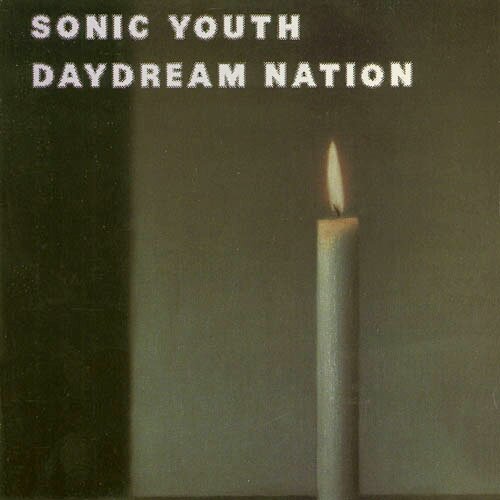
Sonic Youth - Daydream Nation (1988)
Sonic Youth came from NYC's underground music scene; guitarists Thurston Moore and Lee Ranaldo were members of No Wave composer Glenn Branca's guitar ensemble. The band's wide range of influences, including the alternative tunings of Joni Mitchell and admiration for avant garde composers, incorporated into their No Wave and post-punk beginnings (as well as the roots of those genres) to become one of the most respected and influential of their day. Although the band released many great records in their early years (Evol, Sister), Daydream Nation was a game-changer, a true underground artistic statement that has since become one of the most celebrated records of the 80's. A real triumph for noise and drone, as the record ranges from blasts of feedback to long, rolling waves of distortion, backed by otherworldly lyrics and memorable punk melodies.


My Bloody Valentine - Loveless (1991)
My Bloody Valentine's first (second?) album, Isn't Anything, was an entirely new breed of guitar-based indie music. Although the "You Made Me Realise" single marked a change in the band's style from straightforward, twee indie-pop, few would have predicted the outcome of their first studio LP. It became perhaps the first of a genre later known as shoegaze, a highly-amplified and distorted version of Phil Spector's "wall of sound", with a more "alternative" feel, owing to influences from Sonic Youth to Dinosaur Jr.. As many British indie bands decided to release shoegaze records of their own, it was up to MBV to reassert themselves as originators of the movement. After a lot of time, effort and expense a sequel was released in 1991. Loveless was more than anyone could hope for, and is frequently described as one of the greatest albums of the 90's, so much so that the band have yet to release a follow up in the 20 years that have followed. Probably because they've realised they're unlikely to beat it.


Boredoms - Super æ (1998)
Boredoms are nuts. Fronted by enigmatic frontman Yamantaka Eye, the Japanese noisemakers began releasing recordings from the mid 80's, and sound like no other band before or since. Eye's screams sound as if they're propelling the whole chaotic wave of sound he and the rest of the band produce, showing some sort of great yet incoherent virtuosity buried underneath the vastly eccentric and nihilistic haze. Super æ showed Boredoms' change in attitude from their zanier early albums, working more towards a glorified, powerful vision of their own. Yet this vision was vibrant, energetic and intense, as in through the destruction something new and positive could be made, a marked difference from many of their contemporaries, stepping out of the shadows of grunge.


Wilco - Yankee Hotel Foxtrot (2002)
Wilco's fourth album, Yankee Hotel Foxtrot, was mixed by famed noise producer Jim O'Rourke. Jeff Tweedy's beloved alt-country outfit had started to experiment with darker lyrical themes on previous album Summerteeth, and presumably Tweedy was interested in matching these themes with a noisier aesthetic. As recording sessions progressed it became evident that the band's label Reprise Records (owned by Warner Bros. records) were dissatisfied with the change in direction; as a result Wilco bought the album's master tapes and left, finishing YHF and releasing it on Nonesuch Records. The finished result is a real triumph: a post-9/11 indie success story, and an exercise in how far Wilco could push their traditional sound into another, in the Kid A template set out only shortly beforehand. A demonstration of the effectiveness of noise in a seemingly unconnected genre, and how this merging of sounds became a trend throughout the 00's.


The future of noise and drone (2000-
Yeah, perhaps too easy a way to finish off the list. But to choose one band to represent 21st Century noise and drone would be a real injustice, as the influence they've had upon independent music in particular is incalculable. The last couple of years alone represent decades of change in the diversity and experimentalism of these types of music. No Age combine more traditional noise rock with power pop song structures. Sleigh Bells have taken it to bratty dance-punk. Deerhunter have recently done the opposite, subverting their former noise sound into "ambient punk". The electronic soundscapes of Oneohtrix Point Never, as well as Daniel Lopatin's work with Emeralds rely on synthetic drones, as do Fuck Buttons; whereas drone metal band Sunn O))) create terrifying, very "real" drones using just guitars and huge stacks of amplifiers. Colin Stetson has found a way of exploring noise using traditional instrumentation, namely saxophones, purely by being inventive and skillful. The vast number of lo-fi recordings over the last few years can be directly attributed to noise rock. And one of the biggest indie rock releases of recent times, Animal Collective's Merriweather Post Pavillion may have been "too mainstream" for some, still was miles more experimental than anything it shared its chart position with that year.

Attitudes too have changed towards noise as its spread has increased, no longer perceived as the refuge of the oddball music fan and the masochist as they once were. The examples listed are sufficient reason in themselves why. They are the results of the innovations and inventiveness of the minds who perceived and enlightened new ways of composing, recording and performing music. In turn new musicians are likely to innovate and produce strange, harsh, dissonant and unconventional sounds in the future in new ways. Which is proof, if ever needed, that today's music scene is as great as it has always been.